
World Cup 2026 Groups — Draw, Schedule & Betting Odds
 Available in US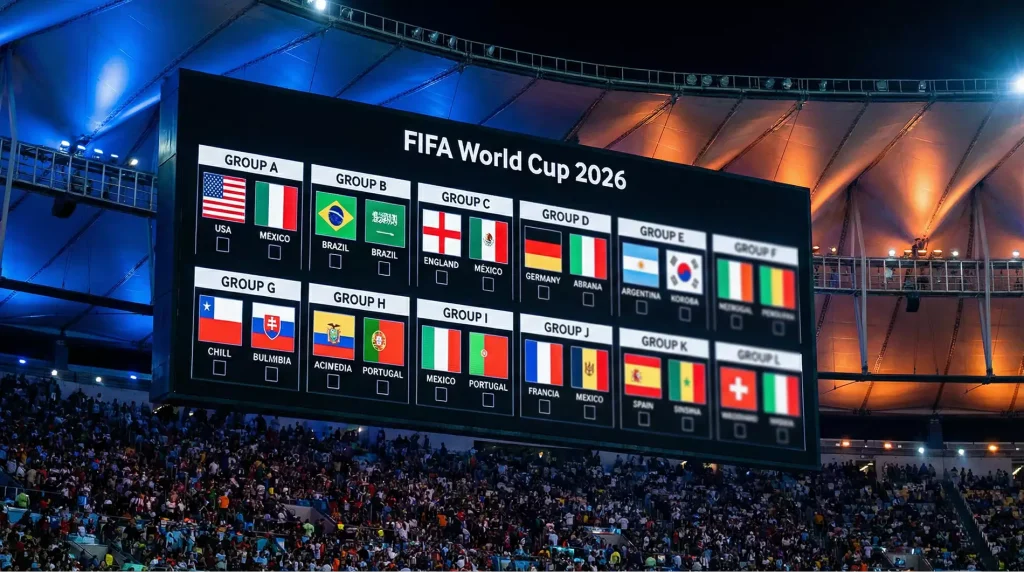
Table of Contents
Twelve groups. Forty-eight teams. A format nobody has ever experienced at a FIFA World Cup. When the draw ceremony concluded on 13 December 2025, football analysts worldwide began dissecting the permutations that would determine which nations advance to the round of 32 — and which would return home after three matches.
The world cup 2026 groups introduce a structural change that transforms betting strategy. Unlike the familiar eight-group format used since 1998, these 12 groups of four teams each create new advancement pathways. The top two from each group qualify automatically — that’s 24 teams. The remaining eight spots go to the best third-placed teams across all groups, meaning finishing third might still deliver knockout-round football depending on results elsewhere.
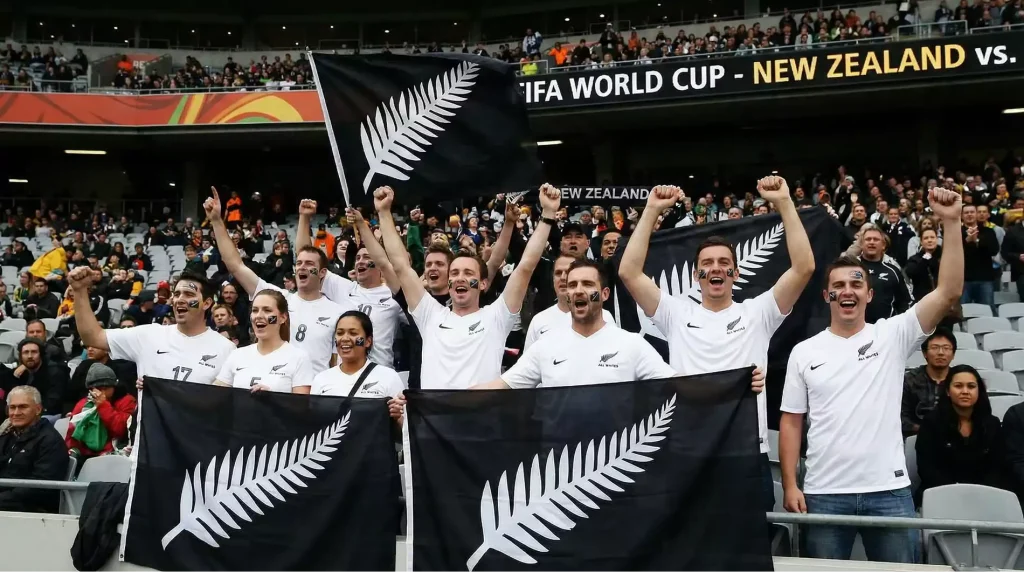
For NZ punters, Group G commands attention above all others. Belgium, Egypt, Iran, and the All Whites compete in a pool that offers genuine advancement potential for New Zealand while presenting intriguing betting angles across every match. But beyond our local interest, each of the 12 groups contains storylines, value opportunities, and tactical dynamics worth understanding. Let me walk you through every pool, starting with the one that matters most to Kiwi supporters.
Group Stage Format: How Qualification Works
At Russia 2018 and Qatar 2022, finishing third in your group meant elimination. No exceptions. The mathematics were simple: eight groups, top two advance, 16 teams progress. That clarity has vanished. The 2026 format introduces complexity that punters must understand before placing group-stage bets.
Each team plays three matches within their group, facing every other team once. Standard points apply: three for a win, one for a draw, zero for a loss. After matchday three, the groups sort teams by points, then goal difference, then goals scored, then head-to-head record if tiebreakers are needed.
The top two finishers from each of the 12 groups advance directly to the round of 32, providing 24 guaranteed qualifiers. The remaining eight spots are allocated to the best third-placed teams across all groups. This means four third-placed teams will be eliminated while eight advance — and the determination of “best” follows the same tiebreaker sequence applied within groups.
What constitutes a “good” third-place finish? Historical analysis from European Championships, which use similar formats, suggests four points virtually guarantees advancement, three points usually suffices, and two points creates precarious scenarios dependent on goal difference and results elsewhere. A third-placed team with four points — achieved through one win, one draw, and one loss — has advanced in every recent tournament using this format.
This structure affects betting strategy fundamentally. Markets for “team to qualify from group” now include third-place scenarios that didn’t exist previously. A team’s odds to qualify might be 2.00 even if they’re unlikely to finish top two, because third-place advancement probability adds significant equity. Conversely, “to top the group” and “to qualify from group” markets diverge more than before — topping requires beating your group rivals, while qualifying requires merely performing adequately relative to third-placed teams in other groups.
Group difficulty affects third-place value dramatically. Finishing third in a “group of death” with four competitive teams might produce a better record than finishing second in a weak group. Market pricing doesn’t always capture this nuance accurately. I specifically target teams in difficult groups whose third-place probability exceeds market-implied probability because their likely points total compares favourably to third-placed finishes elsewhere.
Group G: Belgium, Egypt, Iran, New Zealand — NZ’s Path
I could pretend objectivity about this group, but that would insult your intelligence. Every NZ punter approaches Group G with emotional investment that transcends dispassionate analysis. The All Whites return to the World Cup stage for the first time since 2010, drawn into a pool that — while far from easy — offers genuine advancement potential that seemed impossible when the 48-team format was announced.
Belgium enter as prohibitive favourites at approximately 1.45 to top the group. Their “golden generation” is ageing — Kevin De Bruyne turns 35 during the tournament, Romelu Lukaku 33, Thibaut Courtois 34 — but experience at major tournaments suggests these players know how to navigate group stages. Belgium have finished top of their World Cup group in three of their last four appearances, and this draw represents their easiest path since 2014.
Egypt at 3.50 for second place makes them Belgium’s primary challenger. Mohamed Salah remains one of the world’s most dangerous attackers, and Omar Marmoush has emerged as a genuine elite-level forward through his Bundesliga performances. Egypt’s defensive structure frustrated top nations during their African Cup of Nations campaigns, and their physical preparedness suits North American summer conditions better than European opponents might expect.
Iran’s situation introduces unprecedented uncertainty. Ongoing geopolitical developments — specifically, the conflict involving Iran, the United States, and Israel that intensified in late February 2026 — have raised questions about Iranian participation. The AFC maintains that Iran will compete, but the Iranian Minister of Sport has publicly questioned whether participation is possible. If Iran withdraw, FIFA must determine whether their matches become forfeits, whether a replacement team enters, or whether Group G restructures entirely. Existing bets on Iran-involved markets face potential voiding depending on operator terms.
New Zealand at 10.00 to top the group reflects near-impossibility, but their qualification probability — approximately 42% implied from odds around 2.40 — represents genuine hope. The path likely requires defeating Iran on 15 June, drawing or defeating Egypt on 21 June, and then hoping their points total compares favourably to other third-placed teams or securing an upset against Belgium. Chris Wood’s Premier League-proven goalscoring provides the attacking edge needed to convert limited chances.
Match schedule for Group G in New Zealand time: Iran versus New Zealand on 15 June kicks off at 1:00 PM NZST (the following day from the US perspective). New Zealand versus Egypt on 21 June begins at 1:00 PM NZST. New Zealand versus Belgium on 26 June starts at 3:00 PM NZST. All three matches fall during NZ afternoon hours — convenient for local viewers who won’t need to set overnight alarms.
The 15 June match against Iran represents New Zealand’s tournament-defining moment. A victory would establish a genuine platform for advancement; a defeat would require results against Egypt and Belgium that seem improbable. I’ll be covering every angle of this match through dedicated Group G analysis as the tournament approaches.
Groups A–F: Americas & Europe-Heavy Pools
The first six groups of the tournament feature CONCACAF and CONMEBOL hosts alongside European heavyweights and African challengers. These pools produce opening matches that set tournament tone and offer immediate betting opportunities before fatigue and injuries reshape squad dynamics.
Group A pits co-hosts Mexico against South Korea, South Africa, and Czechia. Mexico open the entire World Cup on 11 June against South Africa at Estadio Azteca — a match carrying enormous symbolic weight as the tournament’s curtain-raiser. Mexico should top this group at odds of 1.65, though South Korea’s tournament pedigree and Son Heung-min’s individual brilliance make them legitimate challengers at 3.50. I expect Mexico and South Korea to advance, with South Africa and Czechia competing for a potentially sufficient third-place finish.
Group B produces one of the tournament’s most open pools. Switzerland at 2.10 slightly edge Canada at 2.30, with Bosnia and Herzegovina at 4.50 and Qatar at 7.00. Switzerland’s consistency at major tournaments — they’ve reached knockout rounds in four of their last five appearances — justifies slight favouritism. But Canada play two group matches in Toronto, creating genuine home advantage that market pricing might undervalue. Bosnia bring European Championship experience and Edin Džeko’s tournament intelligence; Qatar’s 2022 host performance disappointed, making them likely bottom finishers.
Group C features Brazil at 1.40 as heavy favourites over Morocco at 3.00, Scotland at 8.00, and Haiti at 35.00. Brazil should cruise through, but Morocco represent genuine competition for top spot — they defeated Spain and Portugal en route to the 2022 semi-finals and haven’t regressed. Scotland’s return to the World Cup after 28 years generates emotional investment, though their path likely leads to third place. Haiti’s debut provides celebration regardless of results; their presence honours CONCACAF’s expanded pathway.
Group D places hosts USA at 1.50 as favourites over Turkey at 3.50, Paraguay at 5.00, and Australia at 6.00. Home advantage drives American pricing, but this group genuinely contests all four places. Turkey qualified through UEFA playoffs without looking convincing; Paraguay blend South American physicality with emerging young talent; Australia’s Socceroos proved tournament capability in 2022. I view this as the tightest group of the tournament — any finishing order from any team is plausible.
Group E contains Germany at 1.35, a prohibitive favourite facing Ecuador at 5.00, Ivory Coast at 6.50, and Curaçao at 50.00. Germany should dominate without significant stress, allowing squad rotation before knockout rounds. Ecuador’s South American qualification earned respect, and Ivory Coast bring African Cup strength. Curaçao — population 150,000 — represent the tournament’s remarkable underdog story but face an overwhelming talent gap. Germany and Ecuador should advance; Ivory Coast might claim third place with a strong goal-difference performance.
Group F produces genuine four-way competition: Netherlands at 1.55, Japan at 3.75, Sweden at 5.00, Tunisia at 7.00. Japanese fans remember their 2022 defeats of Germany and Spain — they fear no European opponent. Sweden’s physicality contrasts with Japanese technical football. Tunisia’s African Cup experience adds tournament hardening. The Netherlands should top this group, but I view Japan at 3.75 to win the group as the clearest value across Groups A–F. Their proven ability to defeat elite European teams makes them underpriced.
Groups H–L: The Other Half of the Draw
The final five groups contain the defending champions, European Championship winners, and several nations carrying century-long football traditions into the tournament’s second week of group play.
Group H sees Spain at 1.40 dominate pricing over Uruguay at 3.75, Saudi Arabia at 8.00, and Cape Verde at 15.00. Spain’s Euro 2024 triumph confirmed their generation has arrived — Yamal, Pedri, and their young core should mature perfectly for this World Cup window. Uruguay bring tournament experience that never fades; Luis Suárez at 39 might contribute limited minutes, but Darwin Núñez has emerged as an elite replacement. Saudi Arabia’s 2022 victory over Argentina proved they can deliver shocks, though repeating against Spain requires luck aligning with preparation. Cape Verde debut without advancement expectation but will defend with pride.
Group I positions France at 1.30 as near-certainties to progress, facing Senegal at 5.50, Norway at 7.00, and Iraq at 20.00. France’s depth allows rotation without quality drop; Mbappé might rest entire matches while backups still outclass most opponents. Senegal reached the 2022 round of 16 and retain enough quality to challenge for second place. Norway bring Erling Haaland to his first World Cup — his goalscoring rate could explode against modest opposition, making him a live Golden Boot threat if Norway advance. Iraq’s return after decades away provides romantic narrative without realistic advancement possibility.
Group J features defending champions Argentina at 1.25, the shortest group-winner price in the tournament. Algeria at 6.00, Austria at 7.00, and Jordan at 25.00 complete the pool. Argentina should cruise, though their matchday-three fixture might feature heavy rotation if qualification is secured. Algeria’s African Cup form suggests they could push Argentina closer than odds imply — their 6.00 offers potential value against market complacency. Austria bring Central European tournament experience. Jordan debut as AFC’s unexpected qualifier, facing an overwhelming talent gap.
Group K contains Portugal at 1.60, Colombia at 3.00, DR Congo at 7.00, and Uzbekistan at 12.00. Cristiano Ronaldo’s final World Cup drives Portuguese attention, but the supporting cast — Bruno Fernandes, Rafael Leão, Rúben Dias — might actually matter more. Colombia’s return after missing two tournaments delivers Luis Díaz’s world-class talent alongside improved squad depth; their 3.00 to top the group represents value. DR Congo return to the World Cup after 50 years with genuine celebration; their physical style might trouble unprepared opponents. Uzbekistan’s AFC qualification run earns respect without predicting advancement.
Group L pairs England at 1.50 with Croatia at 3.00, Ghana at 7.00, and Panama at 15.00. This draw tests English composure — Croatia eliminated them from the 2018 semi-finals, and that psychological scar hasn’t fully healed. Croatia’s tournament DNA — third place in 2022, runners-up in 2018 — demands respect regardless of ageing squads. Ghana’s return after missing 2022 brings attacking flair; their young forwards could cause problems for defensive-minded opponents. Panama return to their second World Cup without advancement expectation but will defend resilient leads when possible.
Group of Death Contenders
Every World Cup produces the “group of death” narrative — a pool where multiple genuine contenders ensure high-quality casualties. The 2026 format, with 12 groups instead of eight, dilutes top-seed concentration and arguably reduces traditional “group of death” intensity. But several pools still produce competitive drama worth highlighting.
Group F — Netherlands, Japan, Sweden, Tunisia — presents the strongest case for group-of-death status. No other pool features four teams with realistic advancement claims across different continental traditions. Japan proved in 2022 they can defeat European elite; Sweden’s physicality and set-piece prowess generates goals against anyone; Tunisia’s African Cup experience creates tournament hardening that casual observers underestimate. One of these four nations, possibly two, will fail to advance despite genuine knockout-round quality.
Group D — USA, Turkey, Paraguay, Australia — also qualifies as genuinely competitive. Home advantage inflates American expectations, but the other three nations all possess tournament pedigree and tactical identities capable of defeating hosts. Paraguay’s South American qualification demonstrated resilience; Turkey emerged through European playoffs against tested opposition; Australia reached the 2022 round of 16 with performances that exceeded predictions. Any finishing order is plausible, and betting markets haven’t converged on clear favourites.
Group L — England, Croatia, Ghana, Panama — contains historical narrative intensity that might not match objective quality across all four teams. England versus Croatia repeats 2018’s semi-final drama, creating match-specific electricity regardless of current form. But Panama’s inclusion, while meaningful for CONCACAF development, reduces the group’s overall competitiveness. England and Croatia should advance; the “group of death” label feels forced when two spots are essentially predetermined.
Notably absent from group-of-death conversations: the traditional heavyweights drew relatively favourable pools. Argentina face Algeria, Austria, and Jordan. Germany face Ecuador, Ivory Coast, and Curaçao. France face Senegal, Norway, and Iraq. None of these groups features two teams the favourites would want to avoid, which suggests the bracket might not test elite nations until knockout rounds. For punters, this means value in group-winner markets decreases when favourites face weak opposition — look elsewhere for edge.
Third-Place Qualification: How It Works
The third-place qualification rule deserves dedicated analysis because it transforms tournament betting fundamentally. Understanding this mechanism reveals value in markets that casual punters ignore entirely.
After group stages conclude, 12 third-placed teams are ranked using the same criteria as intra-group standings: points, goal difference, goals scored, then various tiebreakers. The top eight advance to the round of 32; the bottom four are eliminated. This creates fascinating scenarios where a team’s advancement depends on results in groups they never played.
Historical precedent from UEFA European Championships — which have used this format since 2016 — suggests threshold requirements. In Euro 2016, third-placed teams with four points all advanced. Teams with three points advanced if their goal difference was neutral or positive. Teams with two points were eliminated. Euro 2020 followed similar patterns: four points guaranteed progress, three points with good goal difference usually sufficed, fewer points meant elimination.
Extrapolating to 2026’s 12-group format: with 12 third-placed teams and eight advancement spots, approximately two-thirds of third-placed teams advance. This should lower the qualification threshold slightly compared to Euro’s 16-team format. Three points might reliably advance more often; two points with strong goal difference becomes possible rather than impossible.
For betting, this affects “team to qualify from group” markets significantly. Consider New Zealand in Group G: their odds to qualify around 2.40 imply roughly 42% probability. This pricing assumes some combination of winning or drawing multiple matches or finishing third with enough points to compare favourably. If you believe New Zealand has, say, 30% chance to finish second and 40% chance to finish third with a qualifying record, their actual qualification probability might exceed 42% — creating value.
Monitor third-place scenarios across all groups simultaneously. A dominant performance by a third-placed team in Group A on matchday three might eliminate a third-placed team in Group L who played earlier without knowing the target. This temporal sequencing creates live-betting opportunities as required points totals clarify through tournament progression.
The psychological dimension of third-place scenarios warrants attention. Teams fighting for third place rather than second face different tactical decisions — do they chase goals aggressively to improve goal difference, or do they protect what they have while hoping other groups produce worse third-place finishes? These decision points create in-play betting opportunities when team behaviour diverges from pre-match expectations. A team content with a draw when they need a win will approach the final 20 minutes differently than odds implied before kick-off.
Key Group Stage Dates in NZ Time
The 16-hour time difference between US Eastern Time and NZST creates viewing schedules that NZ punters must understand. Matches kicking off at evening times in North America land during NZ afternoon and early morning hours the following day. This timing affects when odds move, when team news breaks, and when profitable live-betting windows open.
The opening match — Mexico versus South Africa at Estadio Azteca on 11 June — kicks off at 11:00 AM local time, which translates to 5:00 AM NZST on 12 June. Early risers can watch history unfold; most NZ punters will catch highlights before work. This pattern repeats across many group-stage matches: late-night and early-morning start times from the NZ perspective.
Prime-time US matches — those kicking off at 9:00 PM or 10:00 PM Eastern Time — become 1:00 PM and 2:00 PM NZST the following day. These afternoon NZ times suit local viewers perfectly, offering lunch-break football or post-work viewing without sleep deprivation. All three of New Zealand’s group matches fall into this category: 1:00 PM NZST on 16 June versus Iran, 1:00 PM NZST on 22 June versus Egypt, 3:00 PM NZST on 27 June versus Belgium.
Key dates for NZ punters beyond All Whites matches: Argentina’s Group J opener against Algeria kicks off at 11:00 AM NZST on 14 June — early but watchable. England versus Croatia in Group L on 15 June begins at 3:00 PM NZST — prime afternoon viewing. France versus Senegal on 16 June starts at 8:00 AM NZST — requiring early alarms but offering weekend morning football.
The group-stage conclusion spans 26–29 June, with simultaneous kick-offs ensuring third-place scenarios resolve without teams knowing required targets. These simultaneous matches create complex live-betting environments where NZ punters must track multiple games. I recommend selecting specific groups to follow intensively rather than spreading attention across all simultaneous fixtures.
Time-zone implications extend to betting markets. Odds often move most significantly in the hours before kick-off when team news confirms and professional money enters. For 9:00 PM Eastern Time kick-offs, those final odds movements occur around midday NZST — during NZ working hours when casual punters might miss market shifts. Set price alerts for matches you’re targeting; don’t rely on checking odds only when convenient.
Weekend versus weekday scheduling matters for NZ viewing accessibility. Group-stage matches spread across every day of the week, but the heaviest concentrations fall on weekends when NZ punters have more viewing flexibility. The three-match structure means each team plays roughly every four days, creating gaps where you can catch up on highlights and adjust analysis between fixtures. Planning your viewing schedule around priority matches — especially All Whites fixtures and groups where you hold betting positions — helps manage the overwhelming volume of simultaneous football across three weeks.
Betting on Group Outcomes — Markets & Value
Group-stage betting splits into several distinct market categories, each requiring different analytical approaches. Understanding which markets suit your expertise and bankroll helps focus attention where edge might exist.
“To win the group” markets ask you to identify which team finishes first. These markets typically offer clearer value in pools where favourites face genuine challenges. Germany at 1.35 to win Group E offers minimal return for high probability; Japan at 3.75 to win Group F offers significant return for plausible outcome. I prioritise group-winner bets where the second-favourite has demonstrated tournament capability against the favourite’s style.
“Team to qualify from group” encompasses finishing first, second, or among the best third-placed teams. This broader scope makes these markets more forgiving — you don’t need to identify finishing position precisely, just overall advancement. TAB NZ typically prices these markets attractively for underdogs whose third-place scenarios add equity that casual analysis misses.
“Correct group finishing order” asks you to predict which team finishes first, second, third, and fourth precisely. These markets offer large returns — often 20.00 or higher — for predictions that rarely materialise exactly. I avoid these markets because the variance is enormous and edge is difficult to identify. A single surprise result invalidates your entire stake regardless of how many predictions proved accurate.
Group-stage points total markets — available for some groups — let you bet on how many points specific teams accumulate. These markets reward nuanced understanding of match dynamics better than winner markets. If you believe New Zealand will draw two matches and lose one, backing them for exactly four points might offer better odds than backing them to qualify, which prices in various scenarios you don’t actually believe will occur.
Match betting within groups follows standard head-to-head principles but carries group-context implications. Matchday-three scenarios, where some teams have already qualified while others fight for survival, produce motivation asymmetries that move odds significantly. I treat matchday-three fixtures as almost separate markets from matchdays one and two, applying different frameworks for teams with secured versus uncertain progression.
Value in world cup 2026 groups betting exists where market consensus misses group-specific dynamics. A team’s fourth-pot seeding might reflect FIFA ranking lag rather than current quality. A group’s supposed “favourite” might struggle against the specific style of an underdog drawn alongside them. These inefficiencies appear in every World Cup; the challenge is identifying which pools contain exploitable gaps before prices correct.
Twelve Groups, Endless Permutations
The world cup 2026 groups represent a format without precedent in tournament history. Twelve pools of four teams each, with eight third-place advancement spots alongside 24 automatic qualifiers, creates betting complexity that rewards analysis over assumption.
For NZ punters, Group G demands primary attention. The All Whites face a path that — while far from easy — offers genuine advancement potential that seemed impossible when the draw awaited. Belgium’s quality is undeniable, Egypt’s attack dangerous, Iran’s participation uncertain. But New Zealand’s defensive discipline and Chris Wood’s finishing capability create scenarios where qualification becomes reality rather than fantasy.
Beyond Group G, these 12 pools offer 48 matches of group-stage football before knockout rounds commence. Each match carries betting opportunities; each group rewards understanding of team quality, historical patterns, and contextual motivation. The comprehensive odds breakdown provides current pricing for every market discussed here, updating as the tournament approaches and team news emerges.
The groups are drawn. The schedule is set. The betting markets are open. What remains is analysis, preparation, and the patience to wait for opportunities where your assessment exceeds market-implied probability. That discipline — applied across 48 group matches — separates profitable tournament engagement from expensive entertainment.
