
The Complete World Cup 2026 Betting Guide for New Zealand
 Available in US
Table of Contents
Forty-eight teams. One hundred and four matches. The 2026 FIFA World Cup will be the largest football tournament ever staged, and for NZ punters, that translates into more betting markets than any previous edition. I have covered World Cup betting since Russia 2018, and I can tell you without hesitation that this expanded format changes everything we thought we knew about tournament punting.
This world cup 2026 betting guide breaks down every market available through TAB NZ, explains how the new 48-team structure affects your strategy, and walks you through the decimal odds system that underpins all legal betting in New Zealand. Whether you are backing the All Whites to escape Group G or hunting value in the outright winner market, the information here will sharpen your approach before the opening whistle in Mexico City on 11 June.
New Zealand operates under a state-regulated betting monopoly — TAB NZ and its Betcha platform are the only legal options for placing sports wagers domestically. That constraint actually simplifies the process for local punters, but it also means understanding what markets TAB offers becomes essential. By the time you finish reading, you will know exactly how to navigate those markets, manage your bankroll across a 39-day tournament, and avoid the mistakes that cost casual punters money every four years.
World Cup 2026 Format: What’s New
When FIFA announced the expansion from 32 to 48 teams, the immediate reaction was scepticism. More teams meant weaker competition, went the argument. Eight years later, looking at the final draw, I see something different: a tournament designed to produce chaos, and chaos is where informed bettors find opportunity.
The 48 qualified nations are divided into 12 groups of four teams each. Every team plays three group-stage matches — that part remains familiar. What changes is the qualification pathway to the knockout rounds. The top two finishers from each group advance directly to the round of 32, providing 24 automatic qualifiers. The remaining eight spots go to the best third-placed teams across all 12 groups, meaning even finishing third can be enough to continue.
This third-place rule introduces a layer of complexity that did not exist in previous tournaments. At the 2022 World Cup in Qatar, finishing third in your group meant elimination. Now, a team with four points from three matches could advance while another team with five points stays home, depending on goal difference and goals scored tiebreakers. For punters, this creates value in markets like “team to qualify from group” because the threshold for advancement has dropped.
The group stage runs from 11 June to 28 June 2026, spanning 18 days with matches spread across 16 venues in three countries. That compressed schedule means form fluctuates rapidly — a team looking sharp in their opener might be exhausted by match three. I factor fatigue heavily when assessing third-match group fixtures, particularly for squads with older key players or those travelling significant distances between venues.
Once the round of 32 concludes, the tournament follows the traditional single-elimination format through the round of 16, quarter-finals, semi-finals, and the final at MetLife Stadium in New Jersey on 19 July. That knockout phase is where the tournament transforms from strategy-intensive to raw unpredictability — and where different betting approaches apply.
The three host nations — United States, Mexico, and Canada — each qualified automatically, occupying slots that would otherwise require competitive qualification. This guaranteed placement means we have not seen these squads tested against top opposition in must-win scenarios for two years, which makes assessing their true level more difficult. I treat host nation odds with extra caution; home advantage is real, but untested tournament readiness is a genuine concern.
One structural change that benefits NZ-based punters: the expanded format means 48 opening matches instead of 32. More matches equals more betting opportunities, especially in head-to-head and over/under markets where smaller nations often deliver unpredictable results. I expect at least 10 first-round matches to feature results that would have been considered upsets under the old format, and I build my tournament strategy around identifying where those surprises might occur.
Betting Markets for the World Cup
The first World Cup I covered professionally was Russia 2018. TAB NZ offered maybe a dozen market types for that tournament. This time, the platform lists over 30 distinct categories for major matches, reflecting both technological advancement and increased punter demand. Understanding what is available lets you match the right market to the right insight.
Head-to-Head (Match Result)
The most straightforward market: pick which team wins or whether the match ends in a draw after 90 minutes plus stoppage time. In decimal odds, you multiply your stake by the quoted price to calculate potential returns including your original stake. A $20 bet at odds of 2.50 returns $50 total — your $20 back plus $30 profit.
Head-to-head betting works best in the group stage where draws are common and underdogs play conservatively. In knockout rounds, extra time and penalties complicate this market because head-to-head settles on 90-minute results only. If you want to back a team to progress regardless of how the match ends, you need a different market — more on that below.
I focus head-to-head wagers on matches where one team has clear motivation asymmetry. A group favourite who has already qualified facing a team fighting for survival often produces counterintuitive results. The favourite rests players; the desperate side throws everything forward. These mismatches appear in almost every group by matchday three.
Outright Markets
Outright betting means picking a single outcome that spans the entire tournament. The most popular outright market is “tournament winner” — selecting which team lifts the trophy on 19 July. Other outright options include top scorer (Golden Boot), best young player, team to reach the final, and various group-specific outcomes like “which team tops Group G.”
Outright odds are set before the tournament begins and typically remain available throughout, though prices shorten dramatically for teams that advance deep. Argentina opened around 4.50 to win the tournament — meaning a $100 bet returns $450 if successful. By the semi-final stage, that same bet might only be available at 2.00 or shorter.
I place most outright bets before kick-off because value erodes as results come in. If you believe a team is mispriced, locking in the pre-tournament number captures maximum edge. The exception is backing a team after a poor opener when I believe the market has overreacted. I purchased France at 7.00 during the 2022 World Cup after they lost to Tunisia, and that looked prescient until their quarter-final run.
Multi Bets and Accumulators
A multi bet combines multiple selections into a single wager where all legs must win for the bet to pay. The appeal is massive returns from small stakes — combining four favourites at 1.50 each produces combined odds of 5.06. That $10 bet returns $50.60 if all four results land.
The mathematics work against you. Bookmakers build margin into every selection, and margins compound across legs. A four-leg multi where each individual bet has 5% built-in margin results in nearly 20% effective margin on the combined bet. For this reason, I restrict multis to low-risk selections where I have strong conviction and use them sparingly.
TAB NZ caps multi bets at certain payout levels and may restrict which markets can be combined. Read the terms before constructing elaborate accumulators — nothing destroys confidence faster than a winning multi voided because of rule violations you didn’t know existed.
Player Props and Top Scorer
Player proposition markets let you bet on individual performances: who scores in a specific match, how many goals a player scores across the tournament, whether a goalkeeper keeps a clean sheet. The top scorer market is the flagship player prop — predict which player finishes with the most goals, with dead-heat rules applying if multiple players tie.
Player props require deeper research than team markets. Injury status, penalty-taking duties, and expected minutes all factor into whether a player delivers. Kylian Mbappé at 6.00 looks attractive until you consider that France often rotates their front line and Mbappé doesn’t take penalties when Antoine Griezmann is on the pitch.
I treat top scorer betting as high-variance entertainment rather than strategic investment. The market historically favours prolific strikers on teams expected to reach the semi-finals or beyond, but randomness plays an enormous role. Harry Kane won the 2018 Golden Boot largely because he took penalties for a team that reached the semi-finals — not because he was the tournament’s most dangerous attacker.
How to Read Decimal Odds in NZ
A punter in Auckland once told me he avoided betting for years because he couldn’t understand fractional odds from UK bookmakers. When I explained that New Zealand exclusively uses decimal format, the simplest system in existence, he placed his first bet that afternoon. Decimal odds intimidate nobody once you see how they work.
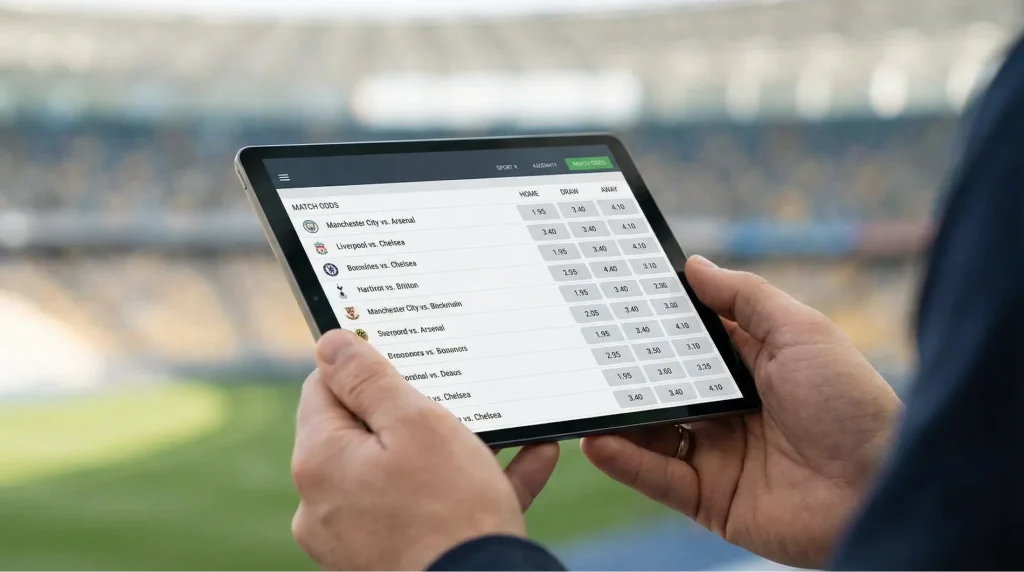
Decimal odds represent the total return on a winning $1 bet, including your stake. Odds of 3.00 mean every dollar wagered returns three dollars total — your original dollar plus two dollars profit. Odds of 1.50 return one dollar fifty total — your original dollar plus fifty cents profit. The higher the number, the less likely the bookmaker believes that outcome will occur.
To calculate your potential return on any stake, multiply the stake by the decimal odds. A $50 bet at odds of 2.25 returns $112.50 total. Your profit is $62.50 because you subtract your original $50 stake from the total return. This calculation works identically whether you’re betting on an All Whites match or an Argentina versus Brazil semi-final.
Converting decimal odds to implied probability requires one simple formula: divide 100 by the decimal odds. Odds of 2.00 imply a 50% probability (100 ÷ 2.00 = 50). Odds of 4.00 imply a 25% probability (100 ÷ 4.00 = 25). This conversion helps you assess whether a price represents value — if your analysis suggests a team has a 40% chance of winning but the odds imply only 25%, you’ve identified potential value.
One quirk specific to New Zealand: TAB NZ displays odds to two decimal places, and those two decimal places matter. Odds of 2.10 versus 2.15 might look trivially different, but over 100 bets at $50 each, that 0.05 difference equals $250 in total returns. I track the prices I bet at and compare against closing odds to measure whether I’m consistently getting better or worse numbers than the market eventually settles at.
Decimal odds also simplify multi-bet calculations. Multiply all the legs together to get the combined odds. A three-leg multi at 1.80, 2.20, and 1.50 produces combined odds of 5.94 (1.80 × 2.20 × 1.50). Your $20 stake returns $118.80 if all three selections win. No conversion tables required, no mental arithmetic beyond basic multiplication.
The beauty of decimal format is transparency. Unlike fractional odds where 9/4 and 11/5 both approximate 3.20 but represent slightly different payouts, decimal tells you exactly what you receive. This clarity benefits punters who compare prices, calculate edge, and make informed decisions — which is precisely what this guide encourages you to do.
Group Stage Betting Strategy
I made a terrible bet during the 2014 World Cup group stage. Spain were defending champions, had just won two consecutive European Championships, and faced the Netherlands in their opener. I put significant money on Spain. The Netherlands won 5–1. That match taught me the most important lesson in group-stage betting: past success means nothing when motivation and tactical preparation diverge.
Group-stage matches reward preparation over prestige. Teams arrive having studied opponents for months, with tactical plans designed for specific fixtures. The gap between elite and modest nations has narrowed at tournament level because underdogs prepare meticulously while favourites often peak too early or fail to adapt. Every World Cup produces “shock” results that seem obvious in hindsight — the key is identifying those setups before kick-off.
My group-stage framework centres on three factors: recent form, head-to-head records in tournament settings, and squad depth relative to schedule demands. Recent form matters because international breaks disrupt rhythm — a team struggling in qualification often carries that uncertainty into the tournament itself. Head-to-head records reveal psychological edges that persist across generations. Squad depth becomes critical by matchday three when injuries, suspensions, and fatigue force rotations.
The draw market deserves special attention during the group stage. Approximately 25% of World Cup group matches end level, yet punters systematically undervalue draws. A match between two evenly-rated sides where both would accept a point — common in groups with one dominant team and three scrapping for second — often produces draws at odds of 3.50 or higher. I actively seek these situations.
Matchday three presents unique opportunities because stakes vary wildly between teams. A favourite who has already qualified often rests key players; their opponent fighting for survival goes all-out. This dynamic flips expected outcomes and creates inflated odds on underdogs who are actually situational favourites. I treat final group matches as their own category requiring separate analysis from matchdays one and two.
Goals markets — over/under 2.5 goals, both teams to score — perform differently in the group stage compared to knockout rounds. Groups with defensive-minded teams regularly produce low-scoring draws, while groups with attacking philosophies generate goal fests. Analyse each group’s composition before blanket-applying goals strategies. Group G, featuring Belgium, Egypt, Iran, and New Zealand, looks likely to produce moderate goal totals given three of four teams prioritise defensive structure over open play.
One strategy I avoid: backing long-shot underdogs purely because the odds seem attractive. A team at 12.00 to beat a group favourite might represent 8% implied probability, but if their actual chance is 3%, you’re destroying money regardless of the big number. Value requires the true probability to exceed the implied probability — not merely the implied probability being low.
Knockout Round Betting Strategy
Everything changes once elimination begins. The cautious draws that define group stages vanish. Teams that played conservatively for 270 minutes suddenly attack because survival requires winning. This shift demands different approaches than those that worked during the opening phase.
Knockout betting hinges on understanding how matches resolve. The standard head-to-head market settles on 90-minute results — if the match goes to extra time and penalties, a draw pays regardless of who eventually advances. Alternatively, “to qualify” markets pay on whichever team progresses, whether through regulation victory, extra time, or a shootout. Know which market you’re entering before placing money.
I focus knockout-stage betting on to-qualify markets rather than head-to-head because the inherent randomness of penalty shootouts is already priced into to-qualify odds. Backing a team at 1.70 to qualify when they’re slight favourites captures value if the match stays close and reaches penalties, which happens in roughly one-third of knockout matches. Head-to-head odds would require them winning in 90 minutes — a significantly harder outcome to predict.
Form momentum matters more in knockout rounds than group stages. A team that scraped through as a third-placed side with four points carries different confidence than one that dominated their group with nine. I weight recent results heavily when assessing round-of-32 fixtures, and that weighting increases through each subsequent round. By the semi-finals, who’s playing well in the tournament matters more than any pre-tournament analysis.
The bracket structure creates asymmetric paths to the final. One side of the draw inevitably clusters more heavyweights than the other, meaning some quarter-finals pit genuine contenders while others feel like mismatches. Study the bracket once the round-of-32 field is set. A team with an easier projected path to the final is worth more than raw quality alone suggests.
Player availability becomes paramount in knockout rounds. A single suspension or injury to a key player can transform a favourite into a vulnerable target. Monitor yellow-card accumulation throughout the group stage — players on one booking miss the next match if they receive another, and that absence might not be reflected in opening odds. This edge appears regularly in round-of-32 and round-of-16 betting.
Discipline in knockout betting means accepting smaller edges than you might demand in group stages. The margins narrow because more attention focuses on fewer matches. If you identified value throughout the groups, protect those profits by being selective once elimination begins. I typically place fewer bets per match in knockout rounds but maintain or increase stake sizes when I do bet — quality over quantity.
Betting with TAB NZ and Betcha
New Zealand’s gambling legislation creates a straightforward reality: TAB NZ is your only legal option for sports betting, and its Betcha platform handles all football markets. Some punters view this monopoly negatively, but I see practical advantages. One platform means one set of rules, one interface to learn, and no temptation to chase better odds across competing bookmakers — a behaviour that often leads to overexposure and poor discipline.
TAB NZ operates under the Racing Industry Act 2020, with the Department of Internal Affairs providing regulatory oversight. This legal framework ensures your funds are protected, disputes follow established procedures, and responsible gambling mechanisms exist by law. Offshore operators cannot offer those guarantees regardless of what their marketing claims.
Betcha launched in 2023 as TAB’s dedicated sports betting brand, operated by Entain under a 25-year contract. The platform provides World Cup markets including match results, outright betting, goalscorer markets, group outcomes, and various specials. Market depth varies by match — the final will have far more options than a group-stage fixture between modest nations.
Account setup requires verification to comply with NZ gambling regulations. Expect to provide identification and proof of address before depositing. This process exists to prevent money laundering and enforce age restrictions — R18 applies to all sports betting in New Zealand. Complete verification early so you’re ready when the tournament begins.
Deposits and withdrawals process in NZD exclusively. Funds arrive quickly through standard banking methods, and TAB NZ maintains a generally positive reputation for prompt payouts on winning bets. Check your bank’s processing times if you need funds available for specific matches — some methods take 24–48 hours to clear.
One limitation to note: TAB NZ’s World Cup odds sometimes lag behind international markets because the platform primarily serves horse racing and rugby audiences. Prices on football matches may not adjust as rapidly as you’d see with dedicated football bookmakers overseas. This can work in your favour if you act quickly on news, but it requires monitoring odds movements yourself rather than assuming TAB reflects the latest information.
For punters seeking detailed guidance on placing their first wagers, resources exist within TAB’s platform and through their customer support channels. The mechanics are not complicated once you understand the basics this guide covers.
Bankroll Management for Tournament Betting
The 2022 World Cup ran for 29 days. By day 15, I knew punters who had exhausted their entire betting budget chasing losses from the group stage. The 2026 tournament spans 39 days with roughly 20% more matches. Without disciplined bankroll management, even winning strategies fail because you run out of ammunition before the profitable knockout opportunities arrive.
Begin by setting a total amount you can afford to lose. This is not a suggestion — it is the foundation of sustainable betting. Your World Cup bankroll should be money that, if lost completely, does not affect your ability to pay rent, buy food, or meet any other obligation. For most recreational punters, this means a few hundred dollars across the entire tournament, not a few hundred per day.
Divide your bankroll into units. I recommend 50–100 units, meaning each standard bet represents 1–2% of your total bankroll. If your total bankroll is $500, a single unit is $5–$10. This sizing protects you from variance — even a terrible run of results won’t eliminate you immediately, giving your strategy time to recover.
Adjust unit sizes based on confidence, not emotion. A high-conviction bet might warrant 2–3 units; a speculative long shot gets 0.5 units at most. What doesn’t change is the upper limit — I never risk more than 5% of my bankroll on any single bet regardless of how certain I feel. Certainty in betting is an illusion; the upset you never expected is always possible.
Track every bet in writing. Note the date, match, market, odds, stake, and result. This record serves multiple purposes: it prevents you from forgetting losing bets while remembering winners, it reveals patterns in your performance, and it provides accountability. A spreadsheet works fine. Paper notebook works too. The format matters less than the discipline.
Resist the temptation to increase stakes after losses. Chasing losses is the fastest route to bankroll destruction. If your strategy is sound, variance will eventually correct. If your strategy is flawed, increasing stakes accelerates the damage. Either way, chasing makes things worse. I’ve seen experienced punters wipe out months of profit in a single session of tilt betting after a bad result.
Plan for the full tournament. Set aside reserves for the knockout stages when opportunities tend to be sharpest. If you deplete 80% of your bankroll during the groups, you’ll be betting in survival mode during the rounds that typically offer the clearest edges. Pace yourself — 39 days is a marathon, not a sprint.
Five Mistakes World Cup Punters Make
At every tournament, I watch the same errors repeat across forums, social media, and casual conversations. These mistakes cost money year after year, yet they persist because human psychology doesn’t change between World Cups. Recognise these patterns in yourself before the tournament begins, and you’ve already improved your odds.
The first mistake is overvaluing pre-tournament favourites. Argentina won in 2022, so Argentina must be the smart bet for 2026, goes the reasoning. But defending a World Cup title is extraordinarily difficult — only Brazil (1962) and Italy (1934/1938) have achieved consecutive wins in the tournament’s 94-year history. Prices on defending champions are invariably too short because casual money floods in based on past success rather than present form.
The second mistake is ignoring time zones. For New Zealand punters, most matches kick off during our afternoon or early morning hours. Placing bets late at night when you’re tired leads to poor decision-making. I schedule my analysis sessions for when I’m alert and place bets well before kick-off — never in the emotional final minutes when you’re second-guessing yourself.
The third mistake is following tipsters blindly. Social media creates an ecosystem where anyone can claim expertise. Verify track records before trusting recommendations. Better yet, develop your own analysis rather than outsourcing your thinking. The punter who understands why they’re backing a team survives bad runs better than one following tips without comprehension.
The fourth mistake is neglecting match context. A fixture between two teams already qualified looks different than the same fixture with one team needing a result. Motivation asymmetry appears constantly in group-stage finales, and failing to account for it produces systematically wrong predictions. Always ask: what does each team actually need from this specific match?
The fifth mistake is betting too frequently. Every match feels important during a World Cup; the tournament dominates media coverage for weeks. But not every match offers genuine betting value. Some games feature accurate odds where neither side represents an edge. The discipline to skip those matches preserves capital for opportunities that actually favour the informed punter.
Your Edge Starts with Knowledge
The 2026 World Cup betting guide you’ve just read covers the foundational concepts that separate thoughtful punters from casual ones. Markets, odds, strategies, and discipline — these elements combine to create an approach that survives contact with reality across 104 matches and 39 days of tournament football.
New Zealand punters have a unique opportunity this time. The All Whites return to the World Cup stage in Group G, facing Belgium, Egypt, and potentially Iran in a group that offers genuine advancement possibilities. I’ll be covering every angle of that campaign and the broader tournament through the comprehensive odds breakdown that tracks market movements throughout the competition.
This world cup 2026 betting guide serves as your reference point. Return to it when questions arise, when strategies need recalibration, or when discipline wavers. The tournament rewards preparation — and preparation begins now, months before that opening whistle in Mexico City.
