
World Cup 2026 Teams — All 48 Squads Ranked for Betting
 Available in US
Table of Contents
Can anyone stop Argentina from becoming the first nation since Brazil in 1962 to win consecutive World Cups? That question drives every betting conversation about the 2026 tournament, and the answer requires evaluating all 48 qualified nations through a lens that combines objective analysis with brutal honesty about limitations.
The world cup 2026 teams represent six confederations, 48 distinct football cultures, and talent levels spanning from generational superstars to journeyman professionals whose greatest achievement will be stepping onto a World Cup pitch. For punters, the challenge isn’t just identifying who’s best — it’s understanding where market pricing fails to capture relative quality, tournament experience, and squad depth across a 39-day competition.
I’ve organised these 48 teams into five tiers based on genuine tournament-winning capability, from the six favourites expected to contest the final through to the debutants and minnows who arrive hoping for a single memorable result. This framework helps punters allocate attention efficiently: focus analysis on tiers where your edge might exist rather than obsessing over obvious favourites whose pricing rarely offers value.
Tier 1 contains the six genuine favourites at odds below 10.00. Tier 2 features established contenders with realistic quarter-final expectations. Tier 3 profiles dark horses capable of deep runs under favourable circumstances. Tier 4 examines underdogs who might advance from their groups despite limited resources. Tier 5 covers the debutants, long-shots, and teams whose World Cup journey likely ends after three matches.
Tier 1: Favourites
Six nations enter the 2026 World Cup with genuine belief they can lift the trophy. Their pricing reflects this status — odds between 4.50 and 7.00 indicate the betting market assigns roughly 15–22% individual probability to each lifting the trophy. Together, these six account for nearly 60% of the implied probability to win the entire tournament.
Argentina
The defending champions carry expectation heavier than any team since Brazil sought their third consecutive title in 1970. Lionel Messi at 38 years old represents both their greatest strength and most significant vulnerability. His tournament experience is unmatched — this will be his sixth World Cup — and his ability to deliver decisive moments in pressure situations proved the difference in Qatar. But Father Time remains undefeated, and Argentina’s attacking system channels almost everything through their captain. A Messi injury would transform this squad from favourite to merely dangerous.
Beyond Messi, Argentina’s midfield depth impresses. Enzo Fernández, Rodrigo De Paul, and Alexis Mac Allister control matches against almost any opponent, while Julian Álvarez provides a Plan B if Messi needs managing. Their Group J draw against Algeria, Austria, and Jordan should allow squad rotation without risking qualification. I expect Argentina to reach at least the semi-finals, but their odds of 4.50 feel short given the consecutive-title curse that has claimed every other defending champion since 1962.
France
No squad at the 2026 World Cup possesses France’s depth. Kylian Mbappé headlines, obviously, but consider the players Didier Deschamps might leave at home: proven Champions League quality in multiple positions, players who would start for 40 of the other 47 nations. This depth allows France to absorb injuries and rotate effectively across a long tournament — critical advantages when fatigue compounds in knockout rounds.
France reached consecutive finals in 2018 and 2022, winning the first and losing the second on penalties after leading 2–0. Their tournament temperament is proven, their system flexible, their coaching stable. Group I with Senegal, Norway, and Iraq presents manageable opposition. At 5.00, France represent the most likely champion after Argentina, though whether that pricing offers value depends on your assessment of back-to-back final probability.
England
Three consecutive major tournament semi-finals — 2018 World Cup, Euro 2020, 2022 World Cup — plus a Euro 2024 final appearance suggests England’s “nearly men” reputation might finally crack. This generation features genuine world-class talent across every position: Jude Bellingham transformed Real Madrid’s midfield, Phil Foden delivers consistently for Manchester City, Bukayo Saka and Cole Palmer provide attacking depth that previous English squads lacked.
The concern with England remains psychological rather than technical. They’ve reached four semi-finals without winning the tournament since 1966 — a pattern suggesting something fails under maximum pressure. Their Group L draw with Croatia, Ghana, and Panama includes a genuine test in Croatia but should allow progression. At 6.00, England are fairly priced: talented enough to win, historically prone to falling short.
Brazil
Brazil’s 2022 quarter-final exit to Croatia on penalties masked a tournament where they were genuinely the best attacking team. Injuries to Neymar and other key players disrupted momentum, and penalty shootout losses reflect randomness as much as failure. The squad entering 2026 has evolved: Vinícius Júnior, Rodrygo, and Endrick form an electrifying young attacking trio, while Casemiro and Fabinho provide midfield steel.
The concern: Brazil’s defensive record. They conceded against Cameroon, South Korea, and Croatia in 2022 — too many goals for a team with championship aspirations. Their 6.50 odds represent the market’s uncertainty about whether attacking brilliance compensates for structural vulnerability. I lean towards Brazil being slightly overpriced; their ceiling remains tournament-winning, but reaching that ceiling requires defensive improvement.
Spain
Euro 2024 champions with the youngest average age among contenders. Lamine Yamal will be 18 during the tournament, Pedri 23, Gavi 21 if fit. This generation has won at youth level consistently and translated that success to senior football faster than expected. Their possession-based style suffocates opponents and Spain rarely need to rely on individual brilliance because the system produces chances methodically.
Spain’s World Cup record since 2010, however, gives pause. Group-stage exit in 2014. Round-of-16 exit in 2018. Round-of-16 exit in 2022. Their European form doesn’t match their World Cup performances, which suggests something about tournament timing, opponent styles, or mental approach fails. At 7.00, Spain represent value if you believe they’ve solved whatever causes their World Cup struggles. I’m cautiously optimistic but acknowledge the pattern.
Germany
Consecutive group-stage exits in 2018 and 2022 humiliated German football. But hosting Euro 2024 appears to have reset the program: the tournament delivered entertaining performances and genuine national enthusiasm that had been absent for years. This Germany squad blends experienced core players with emerging talents who’ve excelled in the Bundesliga and beyond.
Their Group E draw with Ecuador, Ivory Coast, and Curaçao presents minimal difficulty. The question is whether Euro 2024’s momentum carries across two years to North America. At 9.00, Germany sit at the boundary between Tier 1 and Tier 2 pricing. I’ve included them with favourites because their ceiling — peak Germany at a major tournament — remains genuinely world-beating. Whether they reach that ceiling is the gamble.
Tier 2: Contenders
These four nations have proven tournament pedigree and squads capable of defeating any opponent on their day. What separates them from Tier 1 is either squad depth, defensive vulnerability, or historical underperformance that suggests the final remains out of reach. Their odds range from 11.00 to 15.00 — meaningful chances, but the market expects their runs to end in quarter-finals or semi-finals.
Portugal
Cristiano Ronaldo at 41 years old, potentially playing his final World Cup. The narrative writes itself, and sentimental money will shorten Portugal’s odds beyond fair value. Strip away the Ronaldo emotion and you find a genuinely excellent squad: Bruno Fernandes orchestrating from midfield, Rafael Leão providing devastating pace on the wing, Rúben Dias anchoring the defence. Portugal could win this tournament even with reduced Ronaldo minutes.
Their Group K draw with Colombia, DR Congo, and Uzbekistan offers advancement without severe tests, though Colombia represent underrated opponents. At 11.00, Portugal reward bettors who believe this supporting cast has matured enough to carry reduced-role Ronaldo to glory. I have them ranked higher than their odds suggest — this might be the best Portuguese squad in terms of balance since their Euro 2016 triumph.
Netherlands
Semi-finalists in 2022, third place in 2014, runners-up in 2010. The Netherlands consistently produce functional tournament teams despite smaller population and domestic league resources than their competitors. Their direct playing style — vertical passes, quick transitions, physical forward play — suits knockout football where controlling matches matters less than winning them.
Virgil van Dijk commands the defence at 35, which represents both current-tournament strength and near-future vulnerability. The Dutch midfield has regenerated effectively, and their forward line produces goals consistently if not spectacularly. At 13.00, the Netherlands offer value for punters who respect tournament experience and believe their approach matches the knockout format well.
Belgium
The “golden generation” enters what feels like their final opportunity. Kevin De Bruyne, Romelu Lukaku, Thibaut Courtois — these players have defined Belgian football for a decade without delivering the major trophy their talents deserve. Age has claimed Hazard entirely and reduced others. This is either their swan song or their eventual breakthrough; the in-between possibilities have narrowed.
Belgium drew Group G with Egypt, Iran, and New Zealand — a favourable path that should allow progression without expending resources before knockout rounds. At 15.00, their odds reflect market scepticism about ageing legs lasting seven matches in June and July heat. I understand that scepticism while noting that tournament experience, which Belgium possess abundantly, often trumps physical peak in pressure moments.
Uruguay
Four-time World Cup participants in semi-finals or beyond, Uruguay punch absurdly above their weight for a nation of 3.5 million people. Luis Suárez at 39 might feature in his final tournament, while Darwin Núñez has emerged as a genuine elite striker. Their defence remains characteristically stubborn, their mentality proven across decades of tournament football.
Group H with Spain, Saudi Arabia, and Cape Verde realistically requires second-place qualification given Spain’s quality. Uruguay should manage that comfortably. At 25.00, they represent attractive long-shot value for punters who believe the bracket might open favourably and allow their knockout expertise to shine. I wouldn’t back them outright, but Uruguay’s round-of-16 and quarter-final match betting often provides value.
Tier 3: Dark Horses
Dark horse status requires two elements: talent capable of beating top nations and circumstances suggesting improvement beyond recent baseline performance. These four nations could realistically reach semi-finals without that outcome being considered genuinely shocking. Their odds range from 25.00 to 45.00 — long enough to deliver significant returns, short enough that bookmakers acknowledge their potential.
USA
Host nation advantage has produced five World Cup champions playing on home soil. The American squad features Christian Pulisic, Weston McKennie, Tyler Adams, and a generation of players competing at elite European clubs. Home crowd support across 11 US venues, reduced travel distances compared to opponents, and climate familiarity compound into meaningful tournament advantages.
Their Group D draw with Paraguay, Australia, and Turkey offers progression without facing elite opposition until the knockout rounds. At 30.00, the USA represent intriguing value for punters who weight home advantage heavily. The counterargument: American soccer culture hasn’t produced tournament-winning mentality, and hosting pressure might burden rather than liberate young players making their World Cup debuts.
Morocco
Semi-finalists in 2022, the best African performance in World Cup history. Morocco retained most of that squad while adding depth through their diaspora-friendly selection policies. Achraf Hakimi remains one of the world’s best full-backs, their defensive structure frustrated Spain, Portugal, and France in Qatar, and their attacking efficiency has improved since that tournament.
Group C pits Morocco against Brazil, Haiti, and Scotland — a path where topping the group is possible if Brazil struggle early. At 25.00, Morocco offer the best value among dark horses. Their 2022 run wasn’t a fluke; it reflected genuine tactical sophistication and squad quality. I expect them to reach at least the quarter-finals and rate their chances of going further above what their odds imply.
Colombia
Colombia disappeared from World Cups in 2018 and 2022, missing both tournaments entirely. Their return in 2026 follows an impressive CONMEBOL qualification campaign where Luis Díaz established himself as a genuine world-class attacker. The supporting cast has matured, and Colombia’s physical style suits tournament football where small sample sizes amplify luck and mentality.
Group K with Portugal, DR Congo, and Uzbekistan offers realistic advancement, possibly even topping the group if Portugal’s Ronaldo situation disrupts team chemistry. At 45.00, Colombia represent speculative value — their ceiling is genuine semi-final contention, their floor is round-of-16 exit against a European heavyweight. I wouldn’t bet heavily but acknowledge they’re underpriced relative to actual quality.
Turkey
Turkey qualified through the UEFA playoff system, which typically produces weaker entrants. But this Turkish squad has evolved significantly: playing in Group D with USA, Paraguay, and Australia offers advancement potential without facing European elite until knockout rounds. Their physical style and passionate supporter base could create intimidating atmospheres at neutral US venues.
At 80.00, Turkey are priced as second-tier dark horses, which feels appropriate. They’re capable of causing problems for any opponent but lack the defensive solidity to survive multiple knockout rounds against top opposition. Back them for specific matches rather than outright tournament success.
Tier 4: Underdogs with a Chance
These nations likely exit in the round of 32 or round of 16, but could steal headlines through group-stage results or unexpected knockout wins. Their odds exceed 100.00 for outright victory, but their match-by-match betting often provides value because markets underestimate their capabilities against overconfident opponents.
Australia
The Socceroos reached the round of 16 in 2022, their best World Cup result ever. That run was dismissed as a weak-group fluke, but the Australian program has genuinely improved. Players compete in top European leagues, their style has become more technically sophisticated while retaining physical edge, and their experience base has expanded. The transition from Asian Cup regulars to genuine World Cup contenders reflects a decade of investment in youth development and strategic player pathways.
Group D with USA, Paraguay, and Turkey presents genuine competition for second place. Australia should not be dismissed as easy points — they’ve proven tournament capability and their odds of 150.00 reflect historical underperformance rather than current quality. The trans-Tasman rivalry means New Zealand punters will monitor Socceroos progress closely; an All Whites versus Australia knockout match would generate extraordinary interest across both nations despite the mathematical improbability of that bracket alignment.
I expect Australia to advance from the group, though probably in third place requiring favourable third-place comparisons. Their match against USA tests whether they can compete with hosts benefiting from home advantage and passionate crowds. Paraguay and Turkey represent more realistic points opportunities where Australia’s physicality and experience should tell. Back the Socceroos in Asian handicap markets where their underdog status creates value.
Egypt
Mohamed Salah and Omar Marmoush form one of the tournament’s most dangerous attacking partnerships. Egypt’s qualification through CAF demonstrated improved consistency, and their Group G draw offers advancement potential against Belgium, Iran, and New Zealand. Salah playing in a World Cup — he missed Russia 2018 through injury — represents appointment viewing.
At 200.00 for outright victory, Egypt are obvious long-shots. But their group-stage match odds might offer value: teams defending deep against Salah often succeed initially before tiring, creating value on Egypt in second-half markets or late-match results. Their knockout ceiling is quarter-finals at best; their floor is still providing entertaining football in every match.
Japan
Japan troubled Germany and Spain in 2022 before losing to Croatia on penalties in the round of 16. Their ability to compete with elite European opposition is proven, not theoretical. The squad combines Bundesliga regulars with talented domestic-league players, and their tactical flexibility allows approach adaptation match-by-match. Hajime Moriyasu’s system generates pressing intensity that overwhelms unprepared opponents while maintaining defensive structure against counter-attacks.
Group F with Netherlands, Sweden, and Tunisia offers the hardest draw of any Asian nation. Japan might finish anywhere from first to fourth — this group genuinely produces four-way competition. The Swedish physicality presents different challenges than Japanese clubs typically encounter, while Tunisia’s African Cup experience provides tournament hardening that complicates predictions.
At 150.00, Japan are slightly overpriced given their proven tournament performances. I rate them higher than Australia despite similar odds because their ceiling extends to quarter-finals with favourable bracket placement, while their floor remains round-of-16 exit. Japanese football has matured into consistent tournament competitiveness rather than occasional giant-killing.
South Korea
Co-hosts in 2002 when they reached the semi-finals, South Korea return to North America with a squad that includes Tottenham’s Son Heung-min, one of the tournament’s most dangerous attackers. Their Group A draw with Mexico, South Africa, and Czechia offers realistic advancement, potentially even challenging Mexico for top spot.
Son’s ability to deliver individually against any opponent creates upset potential that few teams outside the top 15 possess. At 250.00, South Korea represent long-shot value if you believe Son can replicate his club form on the international stage — historically inconsistent but spectacular when everything clicks.
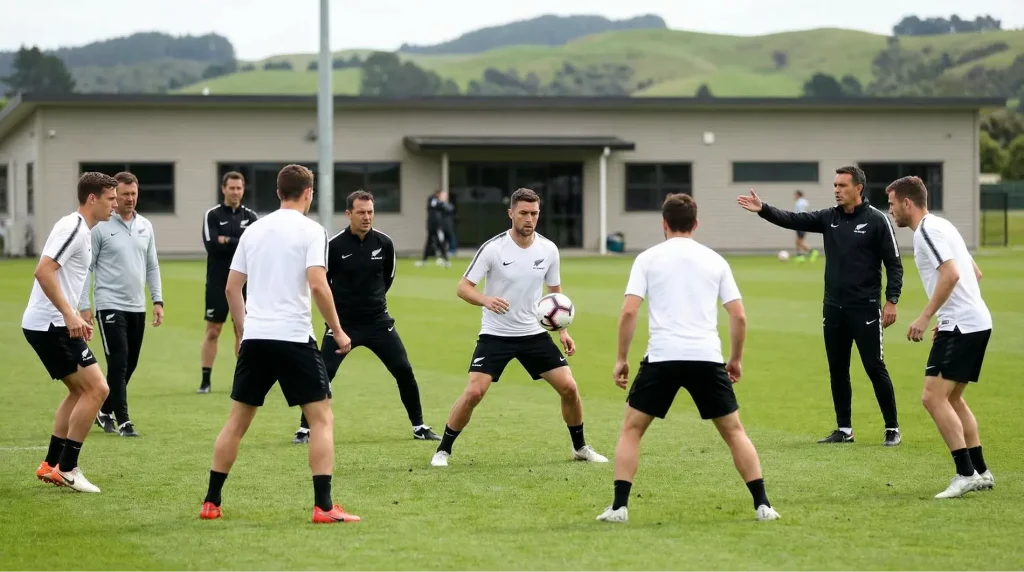
Spotlight: New Zealand — The All Whites Return
Sixteen years passed between New Zealand’s last World Cup appearance and their qualification for 2026. That 2010 tournament in South Africa saw the All Whites achieve something remarkable: three matches, three draws, zero defeats. They left the tournament unbeaten despite facing Slovakia, Italy, and Paraguay — results that remain unique in New Zealand sporting history.
The 2026 squad shares little with that 2010 team except cultural identity. Chris Wood, the Nottingham Forest striker, leads the attack with Premier League-proven goalscoring ability. Behind him, a generation of players who grew up watching that 2010 campaign and dreaming of their own World Cup moment. Darren Bazeley’s side dominated OFC qualification — 8-1 against Vanuatu, 8-0 against Samoa, 7-0 against Fiji — though CONCACAF minnows hardly test tournament readiness.
Group G presents a genuine advancement path. Belgium are heavy favourites, but Egypt and Iran represent beatable opponents for a New Zealand side that prepares meticulously and defends resiliently. The match against Iran on 15 June — assuming Iran participate given ongoing geopolitical uncertainty — becomes effectively a knockout match for third place. Win that, and New Zealand might need only a point against Egypt or Belgium to finish among the best third-placed teams.
Chris Wood’s penalty-taking ability matters enormously. A single converted spot-kick against Iran could determine whether New Zealand advance or exit. Bazeley has built a team around Wood’s strengths: direct wide play creating crosses, set-piece delivery targeting his aerial prowess, defensive shape protecting leads. It won’t be pretty football, but it might be effective football.
At odds of approximately 1500.00 to win the tournament, backing New Zealand outright is pure entertainment rather than serious betting. But their match-by-match odds — particularly against Iran and in the draw market against Egypt — might contain value for punters who believe this group dynamic favours disciplined underdogs. I’ll be tracking every All Whites market through the group stage and providing analysis through this site.
Debutants and First-Timers
The expanded 48-team format guarantees tournament debuts for several nations who previously couldn’t breach qualification barriers. These teams arrive without World Cup experience, facing opponents who’ve navigated tournament pressure multiple times. Historical data suggests debutants struggle: the occasion overwhelms young squads unfamiliar with global attention and compressed tournament timelines.
Haiti qualified through CONCACAF for their first World Cup since 1974. Drawn into Group C with Brazil, Morocco, and Scotland, their tournament likely consists of three defeats — though producing a goal against elite opposition would constitute success for Haitian football development.
Curaçao represent the smallest nation ever to qualify for a men’s World Cup, with a population of approximately 150,000. Their CONCACAF qualification run defied expectations, but Group E with Germany, Ecuador, and Ivory Coast offers no realistic advancement path. Their presence celebrates CONCACAF’s expanded pathway more than competitive tournament potential.
Cape Verde reached their first World Cup through an impressive CAF campaign that included victories over traditional African powers. Group H with Spain, Uruguay, and Saudi Arabia doesn’t offer easy points, but Cape Verde’s defensive organisation might deliver respectable score lines even in defeat.
Jordan qualified from AFC for the first time, reflecting the Asian confederation’s expanded allocation. Their Group J draw with Argentina, Algeria, and Austria essentially guarantees bottom-place finish, but appearing at a World Cup advances Jordanian football significantly regardless of results.
DR Congo returned to the World Cup for the first time since 1974 through an intercontinental playoff. Group K with Portugal, Colombia, and Uzbekistan offers outside advancement possibility if results elsewhere create favourable third-place scenarios. Congolese football boasts genuine talent, and their physical style could trouble technically superior opponents.
AFC, CAF & OFC — Confederation Breakdown
The expanded format allocates increased slots to non-European confederations, which means evaluating teams from AFC, CAF, and OFC requires understanding different qualification contexts and historical tournament performance patterns.
AFC received 8.5 spots (eight guaranteed plus one playoff position), producing Japan, South Korea, Australia, Saudi Arabia, Iran, Qatar, Iraq, and Uzbekistan. Asian teams have improved significantly at recent World Cups — South Korea reached the semi-finals in 2002, Japan and Australia have won knockout matches since then, and the gap between Asian qualifiers and European mid-tier nations has narrowed considerably. The J-League, K-League, and A-League development pathways now feed players into European clubs at unprecedented rates, and this talent migration improves national team quality. I rate Japan and Australia as genuinely competitive, South Korea and Iran as capable of group-stage success, and the remaining four as likely early exits facing structural talent gaps.
CAF received 9.5 spots, the largest-ever African allocation. Morocco, Egypt, Algeria, Senegal, South Africa, Tunisia, Ivory Coast, Ghana, and DR Congo qualified through a competitive continental process. Morocco’s 2022 semi-final proved African teams can compete with anyone when preparation aligns with talent. The CAF contingent also benefits from European dual-nationality players choosing to represent African nations — a talent pool that strengthens squads beyond what domestic leagues alone produce. I expect at least two African nations to reach the round of 16, with Morocco the most likely to advance further.
OFC received one guaranteed spot for the first time since 2006, which New Zealand claimed by dominating regional qualification. The All Whites are the only team from Oceania, representing a continent with limited football infrastructure beyond New Zealand and Australia (who compete in AFC). Their presence matters more for regional development than competitive tournament impact, though Group G does offer advancement possibility.
Understanding confederation context helps assess match odds. European teams often receive inflated market confidence based on club-football reputation rather than international tournament performance. Asian and African teams frequently exceed expectations precisely because markets undervalue their tournament capability. I specifically target value in matches between CONMEBOL/UEFA favourites and AFC/CAF underdogs where pricing reflects reputation more than reality.
48 Teams, One Trophy
This world cup 2026 teams breakdown covers every nation through the lens that matters for punters: where does the market misprice relative quality, tournament experience, and circumstantial advantage? The answers vary across tiers and change as the tournament approaches, but the framework for analysis remains constant.
Favourites dominate pricing for good reason — Argentina, France, England, Brazil, Spain, and Germany possess the talent to beat anyone. But tournament football rewards underdogs more frequently than league competition, and the expanded format increases upset opportunities. Morocco at 25.00, the Netherlands at 13.00, and various group-winner markets offer value that outright favourite betting rarely matches.
The All Whites return after 16 years. For NZ punters, that matters beyond any betting angle. But combining patriotic support with clear-eyed analysis of odds and probabilities transforms emotional investment into potentially profitable tournament engagement. These 48 teams will deliver 104 matches across 39 days — plenty of opportunity for informed punters to find edge.
